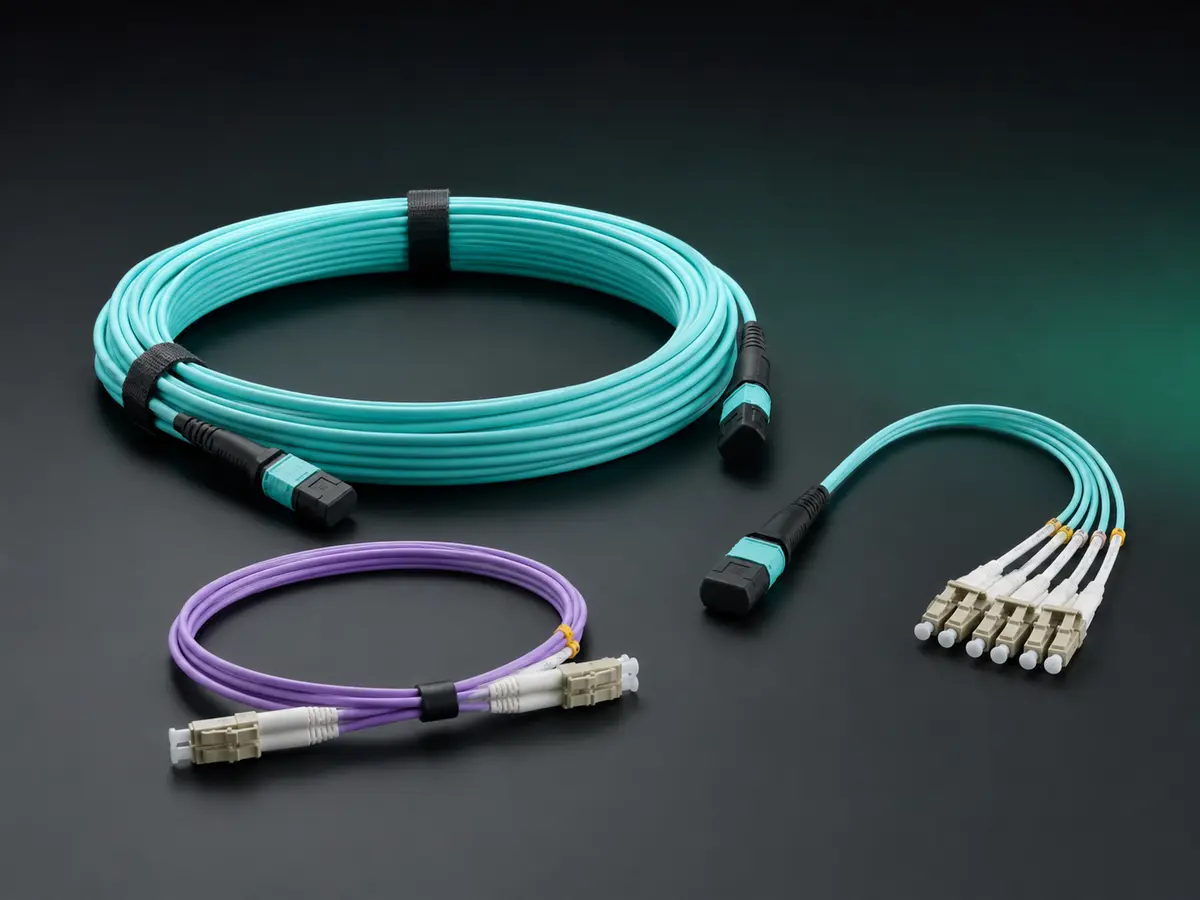
Quality inspection for LC fibre patch cords must verify product identity, optical construction, connector geometry, end-face condition, insertion and return performance, polarity, length, mechanical workmanship, labels and packaging. A clean-looking cable is not necessarily the ordered fibre or polish, and a generic test sticker does not prove that the result belongs to the supplied serial or lot. The checklist must connect specification, method, sample and decision.
Freeze the exact patch-cord specification
Assign a buyer SKU to fibre type and grade, core count, simplex or duplex construction, connector at each end, UPC or APC polish, jacket material and colour, outside diameter, length and tolerance, boot style, clip orientation, polarity, temperature and label.
Do not accept “LC-LC single-mode” as a complete description. Mixing UPC and APC can damage interfaces and create high loss; a duplex clip can reverse intended transmit/receive orientation; an incorrect jacket may fail the installation requirement.
Verify incoming identity and lot traceability
Compare purchase order, carton label, bag label and product label. Record manufacturer part, buyer SKU, quantity, lot or production date and any serial or batch identifier. Sample from different cartons and production positions rather than inspecting the easiest top layer.
Quarantine mixed labels, missing lot identity, unexplained colour changes or packaging that permits fibre damage. Traceability should allow a failed test to identify affected material without treating every historical shipment as the same product.
| Inspection layer | Characteristic | Evidence |
|---|---|---|
| Identity | Fibre, connector, polish, length, label | PO-to-product comparison |
| Optical | Insertion/return loss and polarity | Serial or lot-linked result |
| Geometry | End-face and ferrule parameters | Defined instrument/method |
| Mechanical | Boot, clip, jacket, strain relief | Visual and dimensional check |
Inspect and grade both end faces
Use a suitable inspection scope and agreed acceptance criteria before cleaning. Record defects by zone where the method requires it. Clean with controlled materials, reinspect and distinguish removable contamination from scratches, pits, chips or damaged ferrules.
New packaging is not proof of cleanliness. Keep protective caps and test adapters clean so inspection does not contaminate the cable. Save representative failed images and link them to the sample identity and disposition.
Measure optical performance with a defined method
State wavelengths, reference method, launch and receive cords, adapters, instrument identity and calibration status. Measure insertion loss in the required directions and return loss when specified. Use limits from the purchase specification and application, not an undocumented factory default.
Record numerical results by cable or controlled sample. A pass/fail label without values and method is weak evidence. Investigate outliers, repeat only after recording the original, and prevent retesting from erasing a systematic connector or assembly problem.
Check polarity, length and workmanship
For duplex cords verify transmit-to-receive polarity, clip orientation and connector labels. Confirm simplex/duplex construction, measured length and tolerance. A cord can pass optical loss yet be unusable because its polarity or branch identification is wrong.
Inspect boots, latch operation, strain relief, jacket damage, tight bends, duplex separation, printing and connector seating. Where pull or flex performance is required, use a defined qualification or lot test rather than manually tugging a few units without a criterion.
Control sampling, nonconformance and rework
Choose sample size according to order risk, supplier history and whether the design or process changed. Separate critical identity/polish/polarity defects from cosmetic issues. State whether inspection is sampling or 100%; do not let the report imply broader coverage.
Segregate failed units and define lot escalation. Recleaning may be acceptable for contamination; retermination or component replacement is a controlled rework needing new identity and full retest. A supplier should provide root cause and corrective action for recurring defects.
Make labels, packaging and RFQ support installation
Labels should identify buyer SKU, ends or polarity where needed, length and any project code without placing excessive flags that obstruct routing. Package to maintain bend radius, protect connectors and keep paired or kit components together. Avoid ties that crush the jacket.
Submit fibre, polish, length, polarity, quantities, sampling and test deliverables through the MingApex technical RFQ. Release only the lot that matches the controlled drawing and evidence; a catalogue photograph or connector name is not a production inspection record.
Lot-release decision
A lot is ready when identity, optical results, end faces, polarity, dimensions, workmanship, labels and packaging meet the current specification, failures are contained, and the report states the actual inspection scope. Store the approved sample, drawing revision and evidence so repeat orders can be compared rather than assumed.
Supplier performance feedback
Trend defects by lot, connector end, defect zone, loss, polarity, length, workmanship and packaging. Use the deployed or inspected quantity as the denominator. A repeated pattern should change incoming sampling, supplier corrective action and the next RFQ; isolated cosmetic observations should not distort the technical score.
lc fibre patch cords: technical requirement and quotation review
For LC Fibre Patch Cords Quality Inspection Checklist, share the host model, software release, line rate, reach, fibre type, connector, temperature range and order quantity. MingApex will define the compatibility scope, sample validation, labelling and documented supply steps before quotation.
TECHNICAL RFQ
Turn your part number or project list into a reviewed quotation.
Share the available technical data. MingApex will structure the requirement, identify open compatibility questions and coordinate the supply review in China.
- Host platform or reference part number
- Speed, form factor and required reach
- Wavelength, fibre and connector
- Quantity, sample and delivery target
- OEM label or packaging requirement
- Destination country and Incoterm