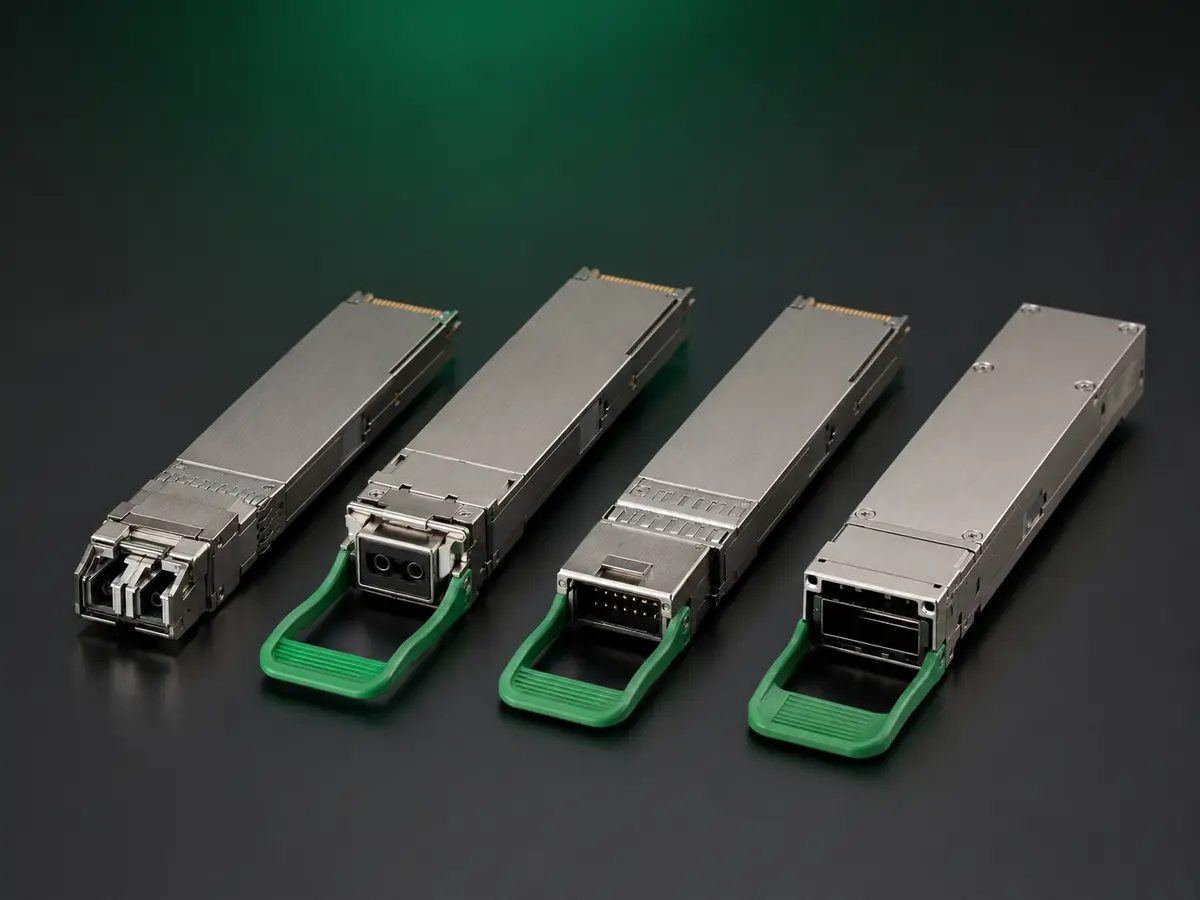
An optical-module OEM programme is a controlled product and supply-chain project, not a logo-printing exercise. The buyer must define product families, host and optical requirements, branding, electronic identity, quality evidence, packaging, change control, warranty and repeat-order traceability. A useful programme keeps the MingApex commercial presentation consistent while making the legal seller, manufacturing responsibility and approved technical configuration unambiguous.
Define the OEM portfolio and buyer identities
Decision baseline: For an optical-module OEM programme, define each form factor, rate, PMD, wavelength, reach, connector, temperature class, host profile, buyer SKU and approved option. Write the requirement at the same level of detail used by engineering, purchasing, receiving and operations. An abbreviation that is convenient in a catalogue is not a controlled specification. Unknown fields must stay visible until an authorised person closes them; they must not be replaced silently by a supplier default.
Evidence package: Retain master product matrix, controlled descriptions, source or manufacturer parts, revision rules and ownership of each technical field. Raw values, methods, dates and product identities matter as much as the final pass statement. Every reading, drawing or document should connect to the applicable buyer line, sample, route, host, lot or serial so another reviewer can reproduce the decision without relying on private messages.
Failure to avoid: A recurring failure is starting with dozens of marketing names that collapse materially different optical or host configurations. This shortcut can create a low price or an apparently working link while moving uncertainty into deployment, warranty or repeat ordering. Record the possible service and commercial consequence before accepting a deviation, and do not generalise one successful test beyond its documented boundary.
Control action: If the baseline and evidence do not agree, launch a small controlled family, assign one buyer identity per configuration and expand only after repeatable approval. Preserve the original state, change one meaningful variable at a time and require every supplier clarification to reference the same controlled product. An accepted exception needs an owner, scope, expiry and revalidation trigger; editing the requirement after a failure is not validation.
Release condition: Close this gate only when the portfolio contains no ambiguous line that receiving, sales or engineering could interpret differently. The approval record should state what was tested, what was inferred from documents and what still depends on buyer validation. Passing this gate authorises the named configuration only; it does not prove universal compatibility, unlimited optical margin or equivalence of future revisions.
Map legal, manufacturing and quality responsibility
Decision baseline: For an optical-module OEM programme, define legal seller, invoice entity, manufacturer or assembler, coding owner, label printer, test party, quality contact, warranty and return party.
Evidence package: Retain company documents, signed responsibility matrix, authorised contacts, contract roles, escalation route and anonymised process records.
Failure to avoid: A recurring failure is allowing the quotation, invoice, sample label and warranty instruction to name unexplained different parties.
Control action: If the baseline and evidence do not agree, document every role and handoff, then stop payment or production when identity and accountability cannot be reconciled.
Release condition: Close this gate only when each contractual and technical obligation has one named accountable party and escalation path.
Control label, packaging and brand artwork
Decision baseline: For an optical-module OEM programme, define brand name, buyer part, product class, wavelength or direction, serial or barcode, required marks, packaging unit and prohibited claims.
Evidence package: Retain artwork revision, colour and material proof, first-piece photographs, scan test, physical sample approval and obsolete-label destruction record.
Failure to avoid: A recurring failure is approving an attractive design that conflicts with electronic identity, direction, traceability or legal brand use.
Control action: If the baseline and evidence do not agree, review artwork with engineering, quality, receiving and legal stakeholders, then lock printing to the approved product revision.
Release condition: Close this gate only when physical label, package, electronic identity and commercial line describe the same controlled product.
Validate samples under the OEM identity
Decision baseline: For an optical-module OEM programme, define buyer line, OEM label, electronic profile, hardware revision, serial, intended hosts, fibre route, test matrix and acceptance limits.
Evidence package: Retain sample custody, both-end recognition, DOM, optical results, traffic and errors, restart, thermal test, deviations and signed approval.
Failure to avoid: A recurring failure is testing an unbranded engineering sample and assuming the final OEM coding, label and production process introduce no difference.
Control action: If the baseline and evidence do not agree, approve the final branded identity on target hosts and retest any change that affects coding, thermal behaviour, handling or traceability.
Release condition: Close this gate only when the approved physical sample represents the actual identity and process intended for volume production.
Specify production testing and lot release
Decision baseline: For an optical-module OEM programme, define which characteristics are checked on every unit or by sample, equipment, method, numerical limits, serial capture, nonconformance and release authority.
Evidence package: Retain test plan, equipment calibration, raw result files, sampling record, failed-unit segregation, corrective action and signed shipment release.
Failure to avoid: A recurring failure is using a generic certificate that implies every unit was tested when only an undefined subset was checked.
Control action: If the baseline and evidence do not agree, state actual coverage, link results to serials or lots and expand inspection when critical or repeated failures appear.
Release condition: Close this gate only when the buyer understands the true evidence boundary and every released lot meets the agreed disposition rule.
Set commercial terms for a scalable programme
Decision baseline: For an optical-module OEM programme, define MOQ by SKU, sample fees, price tiers, forecast, lead time, artwork and coding charges, payment, warranty, returns and order cancellation.
Evidence package: Retain signed quotation, assumptions and deviation register, price-validity period, forecast conditions, service-level commitments and responsibility matrix.
Failure to avoid: A recurring failure is accepting a low module price that excludes setup, validation, small-lot handling, packaging, analysis or future coding support.
Control action: If the baseline and evidence do not agree, normalise complete programme cost, model realistic volumes and separate one-time development from recurring product charges.
Release condition: Close this gate only when the selected offer covers the same technical, branding, quality and service deliverables at each volume tier.
Protect repeat orders with change and traceability control
Decision baseline: For an optical-module OEM programme, define approved sample, BOM or revision boundary, coding profile, artwork, serial rule, production site or process, field performance and change-notification triggers.
Evidence package: Retain version history, effective lot, old-new comparison, buyer approval, first-article check, RMA analysis, installed asset and spare records.
Failure to avoid: A recurring failure is reordering “same as last time” while internal optics, firmware, coding, label material or production process changes unnoticed.
Control action: If the baseline and evidence do not agree, require advance notice, classify revalidation by risk and keep every lot and serial connected to the active approved version.
Release condition: Close this gate only when a repeat buyer can prove product continuity, isolate failures and know which approval authorised each shipment.
RFQ, commercial scope and final approval
A durable OEM programme connects the public brand to a private but auditable product identity, evidence set and accountable supply chain. Brand consistency without technical continuity creates risk rather than value.
Send the exact configuration, hosts, route or assembly, quantities, label requirements and requested evidence through the MingApex technical RFQ. Put assumptions and deviations in a separate register so competing quotations describe comparable deliverables. MingApex is the commercial brand; use Ming Hong Xin Fu Trading Co., Ltd. only where a formal legal company name is required.
The final proposal must not claim trademark affiliation or universal host support without project evidence. Availability, suitability and production equivalence remain order-specific. This workflow does not require publishing transport routes or China departure points; the technical record should focus on product identity, validation, quality evidence and the commercial delivery obligation.
optical module oem programmes: technical requirement and quotation review
For Optical Module OEM Programmes Buyer’s Guide, share the host model, software release, line rate, reach, fibre type, connector, temperature range and order quantity. MingApex will define the compatibility scope, sample validation, labelling and documented supply steps before quotation.
TECHNICAL RFQ
Turn your part number or project list into a reviewed quotation.
Share the available technical data. MingApex will structure the requirement, identify open compatibility questions and coordinate the supply review in China.
- Host platform or reference part number
- Speed, form factor and required reach
- Wavelength, fibre and connector
- Quantity, sample and delivery target
- OEM label or packaging requirement
- Destination country and Incoterm