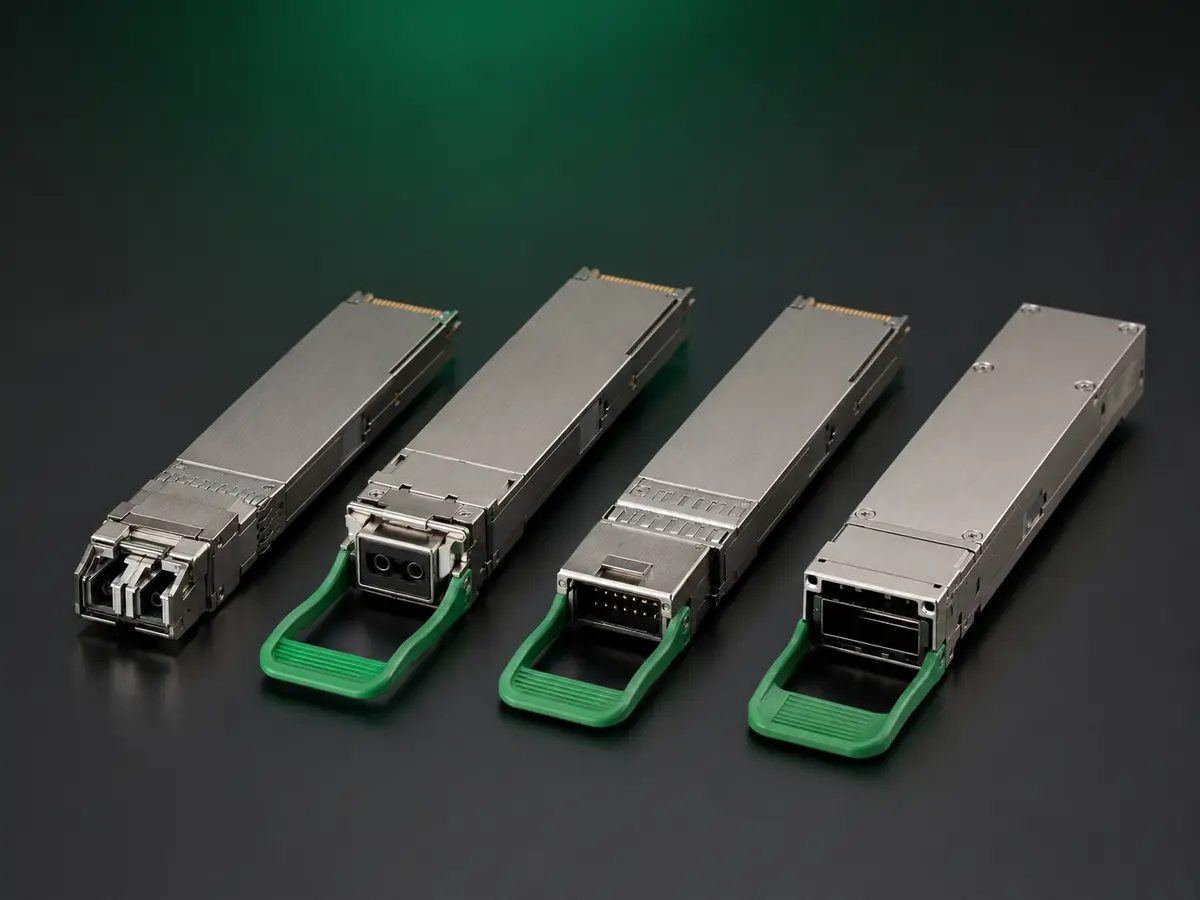
Industrial optical selection must combine host behaviour with local temperature, enclosure, airflow, vibration, contamination, power events, fibre loss and recovery requirements. A temperature label alone does not prove industrial suitability.
Control production and deployment
Decision baseline: For an industrial optical transceiver purchase, define the industrial optical transceiver purchase review by controlling industrial optic application, endpoint and operational boundary. A procurement label is not a design input; translate the application into fields that engineering, purchasing, receiving and operations can all interpret in the same way. Write the requirement at the same level of detail used by engineering, purchasing, receiving and operations. An abbreviation that is convenient in a catalogue is not a controlled specification. Unknown fields must stay visible until an authorised person closes them; they must not be replaced silently by a supplier default.
Evidence package: Retain application, exact hosts, software, port modes, service risk, quantities, deployment plan and accountable owners for industrial optic. Preserve raw outputs, method, equipment, dates, serials, revisions and unsuccessful results; map each item to the exact host, route, sample, lot and buyer order line. Raw values, methods, dates and product identities matter as much as the final pass statement. Every reading, drawing or document should connect to the applicable buyer line, sample, route, host, lot or serial so another reviewer can reproduce the decision without relying on private messages.
Failure to avoid: A recurring failure is A generic industrial optic label may hide incompatible endpoints, physical conditions or service assumptions. That shortcut may pass a limited demonstration while transferring uncertainty into installation, service continuity, warranty investigation or future supply. This shortcut can create a low price or an apparently working link while moving uncertainty into deployment, warranty or repeat ordering. Record the possible service and commercial consequence before accepting a deviation, and do not generalise one successful test beyond its documented boundary.
Control action: If the baseline and evidence do not agree, Resolve the discrepancy by returning to the controlled an industrial optical transceiver purchase baseline, changing one meaningful variable at a time and recording every supplier explanation against the same product identity. Preserve the original state, change one meaningful variable at a time and require every supplier clarification to reference the same controlled product. An accepted exception needs an owner, scope, expiry and revalidation trigger; editing the requirement after a failure is not validation.
Release condition: Close this gate only when Every industrial optic requirement belongs to one named deployment and accountable owner. Release only the named configuration and document assumptions, deviations, expiry and revalidation triggers. The approval record should state what was tested, what was inferred from documents and what still depends on buyer validation. Passing this gate authorises the named configuration only; it does not prove universal compatibility, unlimited optical margin or equivalence of future revisions.
Govern commercial scope and repeat orders
Decision baseline: For an industrial optical transceiver purchase, define For an industrial optical transceiver purchase, calculate and document industrial optic architecture, physical channel and measurable margin. Keep constraints and unknowns visible, assign ownership and prevent a convenient supplier default from changing the buyer’s intended system.
Evidence package: Retain Measure and retain optical architecture, wavelength, fibre, connector, measured route loss, receiver limits, temperature, power and engineering margin for industrial optic. .
Failure to avoid: A recurring failure is Catalogue selection can overlook a weak industrial optic channel, installation constraint or receiver boundary. .
Control action:
Release condition: Close this gate only when The selected industrial optic design has documented physical and engineering margin.
Establish the project decision baseline
Decision baseline: For an industrial optical transceiver purchase, define The an industrial optical transceiver purchase evidence plan must cover industrial optic host behaviour, representative samples and failure cases. Choose samples and conditions from real risk dimensions rather than from whatever is easiest to demonstrate.
Evidence package: Retain Test and retain identified samples, target hosts, traffic, diagnostics, alarms, errors, restart, environmental cases, failures and signed evidence for industrial optic. .
Failure to avoid: A recurring failure is One favourable industrial optic sample cannot prove every host, route, environment or future revision. .
Control action:
Release condition: Close this gate only when The named industrial optic configurations complete the agreed validation matrix.
Engineer the technical configuration
Decision baseline: For an industrial optical transceiver purchase, define Production readiness for an industrial optical transceiver purchase depends on industrial optic controlled identity, lot evidence and installed traceability. Connect the approved identity to every released lot, installed unit and nonconformance decision.
Evidence package: Retain Require and retain approved BOM, coding, first article, production screens, lot sampling, serial traceability, labels, packaging and change control for industrial optic. .
Failure to avoid: A recurring failure is A passed sample or certificate cannot by itself prove delivered industrial optic production identity. .
Control action:
Release condition: Close this gate only when Released industrial optic lots demonstrably match approved samples and receiving criteria.
Qualify representative evidence
Decision baseline: For an industrial optical transceiver purchase, define Before committing to an industrial optical transceiver purchase, normalise industrial optic complete offer, lifecycle exposure and repeat-order conditions. A comparable offer describes one complete technical and commercial deliverable instead of a headline part and price.
Evidence package: Retain Compare and retain normalised scope, samples, MOQ, price tiers, lead time, warranty, support, spares, deviations and repeat-order identity for industrial optic. .
Failure to avoid: A recurring failure is A low headline price or old nickname can conceal changed industrial optic scope and reorder risk. .
Control action:
Release condition: Close this gate only when The selected industrial optic offer and every reorder remain linked to current evidence.
RFQ, commercial scope and final approval
Release the exact host-module-route identity that passed the representative environmental and service matrix.
Send the exact configuration, hosts, route or assembly, quantities, label requirements and requested evidence through the MingApex technical RFQ. Put assumptions and deviations in a separate register so competing quotations describe comparable deliverables. MingApex is the commercial brand; use Ming Hong Xin Fu Trading Co., Ltd. only where a formal legal company name is required.
The final proposal must not claim trademark affiliation or universal host support without project evidence. Availability, suitability and production equivalence remain order-specific. The technical record should focus on product identity, validation, quality evidence and the commercial delivery obligation.
industrial optical transceivers buyers: technical requirement and quotation review
For Industrial Optical Transceivers Buyer’s Guide, share the host model, software release, line rate, reach, fibre type, connector, temperature range and order quantity. MingApex will define the compatibility scope, sample validation, labelling and documented supply steps before quotation.
TECHNICAL RFQ
Turn your part number or project list into a reviewed quotation.
Share the available technical data. MingApex will structure the requirement, identify open compatibility questions and coordinate the supply review in China.
- Host platform or reference part number
- Speed, form factor and required reach
- Wavelength, fibre and connector
- Quantity, sample and delivery target
- OEM label or packaging requirement
- Destination country and Incoterm