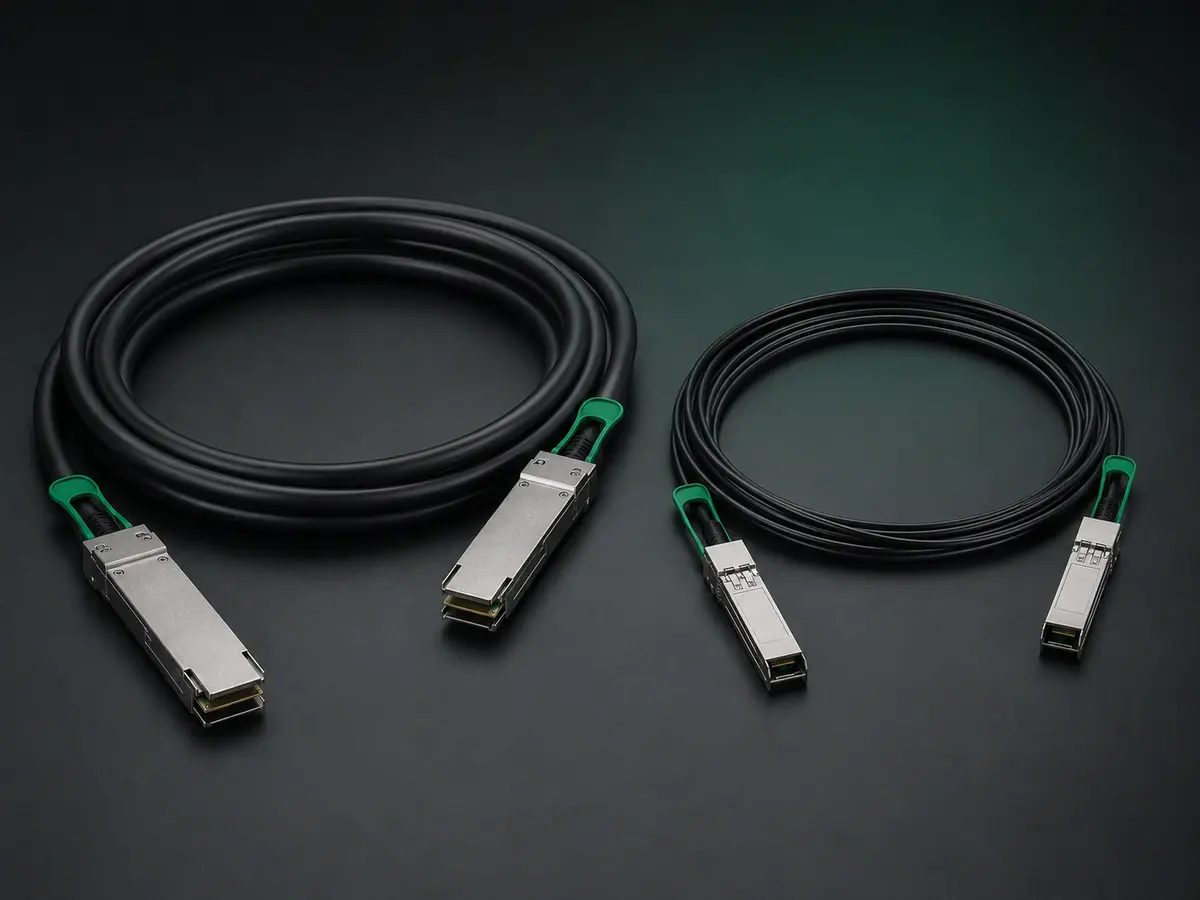
Direct Attach Copper Cables Troubleshooting and Root-Cause Checklist is most useful when the requirement is treated as a controlled technical and commercial specification rather than a generic part-name search. This guide explains the decisions professional buyers should document before requesting samples, comparing quotations or approving a production order.
Start with the application and host platform
Direct Attach Copper Cables may be used across short-reach rack and row connectivity. The same headline speed does not make every product interchangeable. Record the host manufacturer, exact device model, hardware revision, operating-system or firmware version, port configuration and any existing reference part number. For mixed-vendor networks, document both ends of the link and the intended interoperability path.
The core decision set normally includes passive/active selection, length, gauge, breakout and compatibility. If one of these fields is unknown, mark it as an open question instead of allowing a supplier to assume a convenient value. Clear unknowns make quotations more comparable and reduce the risk of receiving a technically plausible but operationally unsuitable item.
Troubleshooting: specification checklist
Troubleshoot from physical layer to host configuration: cleanliness, fibre, polarity, optical levels, coding recognition, software support, FEC and error counters. Change one variable at a time.
- Host platform, port type, software version and required coding profile
- Data rate, form factor, lane architecture and FEC expectations
- Required reach, fibre type, connector and patching architecture
- Wavelength plan, optical budget and environmental temperature
- Quantity, sample requirement, delivery target and repeat-order forecast
Compatibility is more than the connector
A module can fit mechanically and still fail recognition, diagnostics, FEC negotiation or stable link operation. Compatibility review should therefore cover host coding, software support, DOM/DDM behaviour, breakout mode, lane mapping and the actual fibre plant. When a project includes multiple switch families, create a compatibility matrix instead of using a single generic statement such as “Cisco compatible” or “universal.”
For a new platform or a material configuration change, request a sample coded to the proposed production profile. Record the host used for validation and retain the approved identification, label and configuration as the repeat-order reference.
Evaluate the supplier and evidence
Compare quotations on the same controlled specification. Ask who owns coding, final inspection, labels and corrective action. Confirm whether the quotation is tied to a specific production source or can change without notice. Low initial pricing is not a saving if configuration changes create field failures, emergency replacements or project delays.
Evidence should match the risk of the order. Useful records may include a confirmed specification sheet, label artwork, sample approval, available test summary, quantity check, packing list and shipment photographs. Avoid treating a generic factory certificate or unrelated laboratory image as proof that the ordered configuration was validated.
Plan MOQ, lead time and change control
MOQ and lead time depend on the product family, coding work, wavelength, component availability, packaging and order mix. Separate sample timing from production timing. For recurring programmes, document acceptable substitutions, notification requirements and the reference configuration that must remain stable.
Commercial terms should state currency, Incoterm, payment stage, warranty route and responsibility for compatibility claims. A structured change-control rule is especially important for private-label and project-coded products because an unannounced component or coding change can affect repeat-order performance.
Build a useful RFQ
A strong RFQ gives suppliers enough information to answer precisely. Include the platform or part number, required speed and form factor, reach, wavelength, fibre, connector, operating temperature, quantity and delivery destination. Add sample expectations and any required labels, packaging or documentation. If alternatives are permitted, require suppliers to identify every deviation.
MingApex coordinates optical-connectivity sourcing, compatibility questions, OEM requirements and independent quality-control steps from China. Review the optical product catalogue or send a technical RFQ. Availability and exact specifications are confirmed per RFQ; published ranges are portfolio guidance and are not a blanket stock claim.
Decision summary
Use Direct Attach Copper Cables only after the host, link and commercial assumptions are visible. Lock the specification, validate a representative sample where required, approve the coding and labels, and release the production lot against the same record. This sequence creates a more reliable basis for comparing suppliers and repeating the order.
direct attach copper cables: technical requirement and quotation review
For Direct Attach Copper Cables Troubleshooting and Root-Cause Checklist, share the host model, software release, line rate, reach, fibre type, connector, temperature range and order quantity. MingApex will define the compatibility scope, sample validation, labelling and documented supply steps before quotation.
TECHNICAL RFQ
Turn your part number or project list into a reviewed quotation.
Share the available technical data. MingApex will structure the requirement, identify open compatibility questions and coordinate the supply review in China.
- Host platform or reference part number
- Speed, form factor and required reach
- Wavelength, fibre and connector
- Quantity, sample and delivery target
- OEM label or packaging requirement
- Destination country and Incoterm