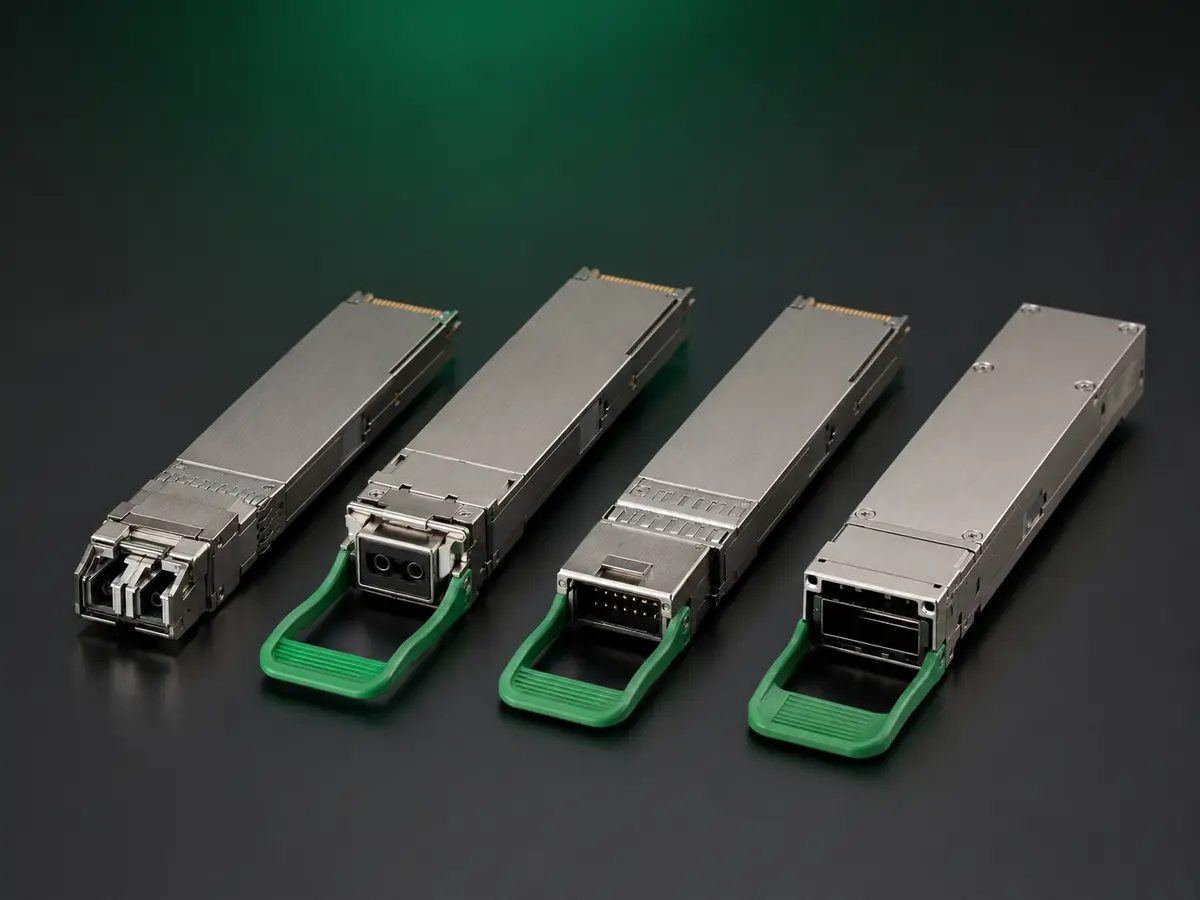
BiDi Optical Transceivers Compatibility Guide is intended for network engineers, laboratories and support teams. It focuses on proving a complete A-to-B pair on the named host platforms and on preventing host recognition at each end being mistaken for a functional matched optical link.
A BiDi link carries transmit and receive signals on different wavelengths over one single-mode fibre. The two ends are complementary products: the transmit wavelength of side A must match the receive band of side B, and vice versa.
Define the endpoint pair
Evidence for define the endpoint pair should identify both module serials, lot, wavelength test equipment, fibre route, traffic pattern and numeric pass limits. Preserve readings from each direction separately.
Test cold insertion, warm restart, full power cycle and controlled A/B swaps. A reversed or same-side pair should be recognised as a configuration fault rather than misclassified as random module failure.
Record host hardware and software
Manage record host hardware and software across engineering, purchasing, receiving and operations. The quote, pair matrix, purchase lines, labels and installed endpoints must retain the same A/B relationship.
Clean and inspect simplex LC connections, calculate route loss and retain operating margin above sensitivity without exceeding receiver overload. Confirm that any patching preserves the single-fibre path.
Verify form factor and speed
Verify form factor and speed must identify both host platforms, software releases, form factor, data rate, reach class and the exact Tx/Rx wavelength assignment on each side. “BiDi compatible” is not a complete pair specification.
Run full-rate bidirectional traffic and monitor errors, alarms and recovery at both hosts. Measure received power in each direction because connector loss, reflections and transmitter variation can affect the two paths differently.
Match complementary wavelengths
For match complementary wavelengths, record A-side and B-side part numbers, connector type, simplex fibre route, nominal wavelengths, transmitter power, receiver sensitivity, overload limit and DOM expectations.
Limit exceptions to named hosts, software builds, wavelength pairs, reach and production lots. Assign an owner and revalidation trigger before the pair enters an approved-parts list.
Confirm simplex fibre path
Evidence for confirm simplex fibre path should identify both module serials, lot, wavelength test equipment, fibre route, traffic pattern and numeric pass limits. Preserve readings from each direction separately.
Test cold insertion, warm restart, full power cycle and controlled A/B swaps. A reversed or same-side pair should be recognised as a configuration fault rather than misclassified as random module failure.
Check EEPROM coding
Manage check eeprom coding across engineering, purchasing, receiving and operations. The quote, pair matrix, purchase lines, labels and installed endpoints must retain the same A/B relationship.
Clean and inspect simplex LC connections, calculate route loss and retain operating margin above sensitivity without exceeding receiver overload. Confirm that any patching preserves the single-fibre path.
Review DOM readings at both ends
Review DOM readings at both ends must identify both host platforms, software releases, form factor, data rate, reach class and the exact Tx/Rx wavelength assignment on each side. “BiDi compatible” is not a complete pair specification.
Run full-rate bidirectional traffic and monitor errors, alarms and recovery at both hosts. Measure received power in each direction because connector loss, reflections and transmitter variation can affect the two paths differently.
Run sustained traffic
For run sustained traffic, record A-side and B-side part numbers, connector type, simplex fibre route, nominal wavelengths, transmitter power, receiver sensitivity, overload limit and DOM expectations.
Limit exceptions to named hosts, software builds, wavelength pairs, reach and production lots. Assign an owner and revalidation trigger before the pair enters an approved-parts list.
Measure optical margin
Evidence for measure optical margin should identify both module serials, lot, wavelength test equipment, fibre route, traffic pattern and numeric pass limits. Preserve readings from each direction separately.
Test cold insertion, warm restart, full power cycle and controlled A/B swaps. A reversed or same-side pair should be recognised as a configuration fault rather than misclassified as random module failure.
Exercise reboot and reseat
Manage exercise reboot and reseat across engineering, purchasing, receiving and operations. The quote, pair matrix, purchase lines, labels and installed endpoints must retain the same A/B relationship.
Clean and inspect simplex LC connections, calculate route loss and retain operating margin above sensitivity without exceeding receiver overload. Confirm that any patching preserves the single-fibre path.
Approve exact combinations
Approve exact combinations must identify both host platforms, software releases, form factor, data rate, reach class and the exact Tx/Rx wavelength assignment on each side. “BiDi compatible” is not a complete pair specification.
Run full-rate bidirectional traffic and monitor errors, alarms and recovery at both hosts. Measure received power in each direction because connector loss, reflections and transmitter variation can affect the two paths differently.
Compatibility sign-off checklist
For compatibility sign-off checklist, record A-side and B-side part numbers, connector type, simplex fibre route, nominal wavelengths, transmitter power, receiver sensitivity, overload limit and DOM expectations.
Limit exceptions to named hosts, software builds, wavelength pairs, reach and production lots. Assign an owner and revalidation trigger before the pair enters an approved-parts list.
The release record should separate measured performance, supplier-controlled specifications and buyer assumptions. Link both approved serials to their pair identity so repeat orders remain complementary.
TECHNICAL RFQ
Turn your part number or project list into a reviewed quotation.
Share the available technical data. MingApex will structure the requirement, identify open compatibility questions and coordinate the supply review in China.
- Host platform or reference part number
- Speed, form factor and required reach
- Wavelength, fibre and connector
- Quantity, sample and delivery target
- OEM label or packaging requirement
- Destination country and Incoterm