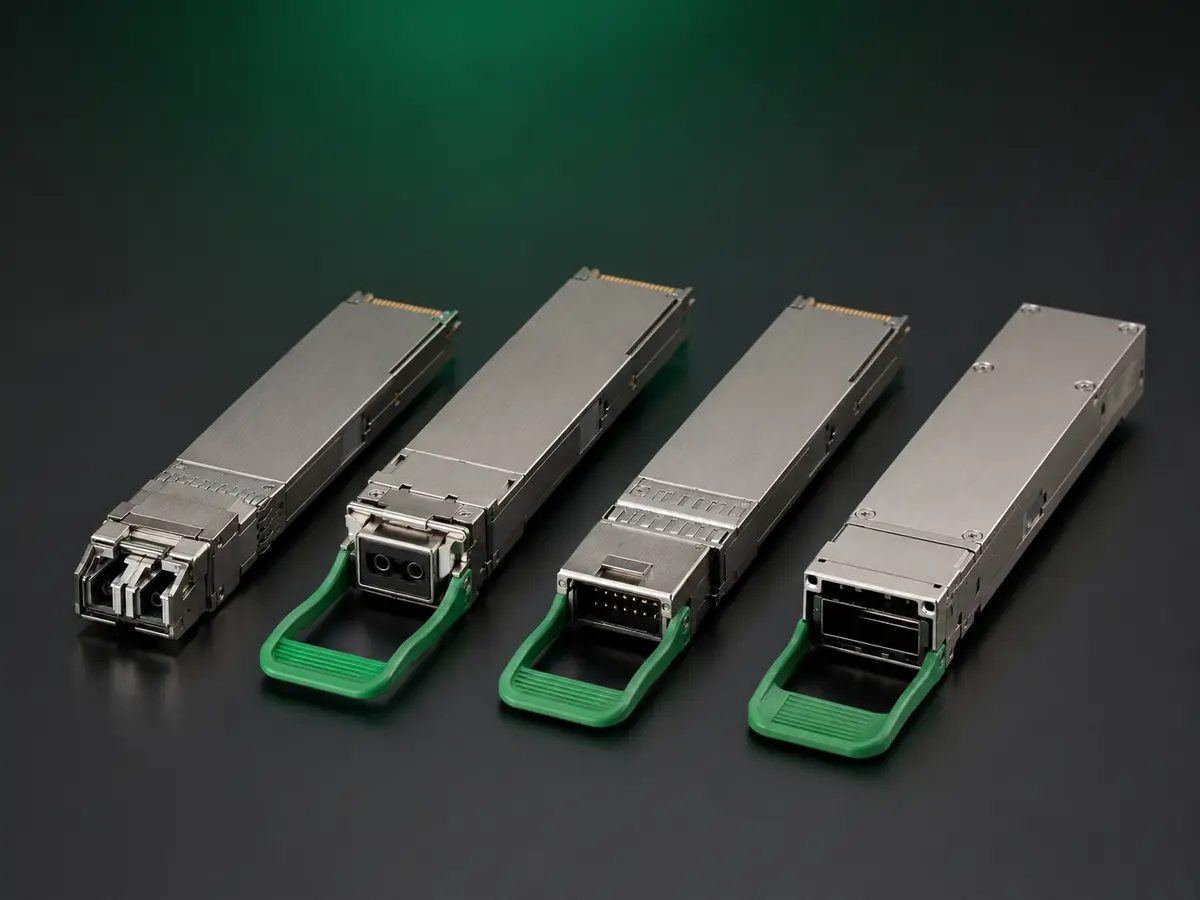
Quality inspection for 100G QSFP28 transceivers must connect the ordered specification, physical identity, host compatibility, optical performance and production-lot evidence. A generic link-up screenshot does not show whether the delivered units match the approved sample or whether the link will remain stable during traffic and recovery events. This checklist is designed for sample approval, production receiving inspection and root-cause triage.
Freeze the approved configuration before inspection
Create a controlled reference before samples or production units arrive. Record the commercial part number, optical standard or architecture, reach class, wavelength plan, connector, fibre type, temperature grade, host-coding profile, label revision and packaging requirements. Attach the approved quotation and any agreed exceptions.
The reference must also name the intended host hardware, software and port mode. Inspection cannot prove “general compatibility”; it can verify conformance to a defined configuration. If any required field is unknown, keep it open rather than allowing receiving staff to guess.
Check packaging, quantity and traceability
Inspect outer cartons for damage, moisture or signs of repacking. Compare carton labels, packing list and purchase order. Confirm quantity by part and label revision. Photograph the unopened shipment when order value or claim risk justifies it.
Record serial numbers or lot references according to the agreed traceability level. The record should connect each selected test unit to the shipment and purchase-order line. If serial formats, country information, manufacturer identity or lot coding differ from the approved sample, pause release until the change is explained.
Inspect module identity and physical condition
Compare the housing, pull tab, latch, label, connector type and key markings with the approved reference. Inspect the optical receptacle or cable termination under the appropriate cleanliness procedure. Bent parts, damaged latches, contamination, loose assemblies or inconsistent labels require segregation.
| Inspection item | Acceptance question | Record |
|---|---|---|
| Product identity | Does the label match the approved part and revision? | Photograph and serial or lot |
| Connector | Is the interface correct, clean and undamaged? | Inspection result and cleaning action |
| Mechanical fit | Does the latch engage and release normally? | Host port and sample identity |
| Packaging | Are protection, ESD controls and labels consistent? | Carton and inner-pack photographs |
Read identification memory on the real host
Insert selected units into the named platform and capture the host inventory output. Verify part identity, serial, vendor fields, wavelength or cable information, supported capability data and any host-specific coding behaviour. Compare with the approved sample rather than relying only on the printed label.
Check that the module is accepted without unauthorised override commands. If the project permits an override, document the exact command, operational consequence and owner. A hidden override is not the same as native host acceptance.
Review diagnostics and alarm behaviour
Capture reported temperature, supply voltage, transmit power, receive power, bias current where available, alarm state and thresholds. Values should be plausible and stable for the test condition. Look for frozen readings, impossible values, unexplained lane differences or alarms that remain after the condition is corrected.
Diagnostics are not a substitute for calibrated laboratory measurement, but they are important operational evidence. Retain raw host output with date, host, port, software and module serial so later faults can be compared with the receiving baseline.
Measure link performance and margin
Verify that the test route matches the optical architecture: correct fibre type, connector, polarity and far-end configuration. Record route loss or the controlled test setup. Review received power against both receiver sensitivity and overload limits, with an operating reserve appropriate to the deployment.
For parallel optics, capture lane-level readings and counters. Aggregate link status can hide a weak lane. For duplex wavelength solutions, verify the correct optical class and route budget. A pass on a very short laboratory jumper should not be generalised to a long production route without margin analysis.
Test traffic, FEC and error counters
Run sustained bidirectional traffic under the intended port mode. Record frame-size profile, load, duration, FEC configuration, corrected and uncorrected errors, packet loss and relevant lane counters. Clear counters only after the initial state has been captured.
Acceptance limits must be written before the test. Zero packet loss over a short run may still hide rising corrected-error rates or an unintended FEC state. Investigate trends and differences between samples instead of reporting only a final pass.
Exercise restart and recovery events
Quality release should include cold boot, warm restart, port disable and enable, module removal and reinsertion, and fibre removal and restoration. Measure time to stable service and confirm that alarms and counters return to the expected state.
If breakout operation is required, test every leg and the actual host command. Repeat the recovery sequence in both native and breakout modes when both are part of the purchase requirement.
Select production samples by risk
Sampling should cover the lot rather than the easiest units to reach. Spread selections across cartons, serial ranges or production references. Increase the sample when the item is new, the supplier or source changed, prior failures exist, or the deployment has high outage impact.
A sampling plan does not eliminate responsibility for the untested units. It is a release tool based on agreed risk. Define what result triggers expanded inspection, lot quarantine or full rejection.
Troubleshoot without destroying evidence
When a failure appears, preserve the original host output, port configuration, diagnostics, counters, physical route and sample identity. Classify the symptom before making changes. Change one meaningful variable at a time and record the effect.
| Failure | Primary checks | Useful isolation step |
|---|---|---|
| Rejected or unsupported | Coding, host policy, software and approved profile | Compare approved reference unit in the same port |
| No link | Port mode, FEC, polarity, fibre, cleanliness and far end | Use a controlled known-good route without changing host |
| Low receive power | Route loss, connectors, transmitter level and fibre type | Measure segments and inspect connectors |
| Errors under load | FEC state, lane counters, optical margin and temperature | Repeat with controlled attenuation or known-good peer |
| Restart failure | Initialisation, firmware, boot order and port settings | Capture a timed cold and warm sequence |
Do not close the investigation simply because swapping the module restores service. Determine whether the cause follows the unit, port, host, route, software or configuration. Retain failed units and evidence until corrective action is verified.
Define lot disposition and corrective action
Every inspection outcome should be release, conditional release, quarantine or rejection. Conditional release needs a written scope, owner and expiry or follow-up action. Quarantined material must remain identifiable and separated from released stock.
For supplier corrective action, provide evidence tied to exact serials, host conditions and test methods. Ask for root cause, affected scope, containment, permanent correction and verification. A replacement shipment without an explanation may solve the immediate shortage while leaving repeat-order risk unchanged.
Preserve a repeat-order reference
Store the approved sample record, label, coding profile, inspection checklist, test output and accepted lot information together. Reference them in future purchase orders. Require notification before changes to source, components, firmware, coding or labels that could affect compatibility or traceability.
The goal is not to create paperwork for its own sake. The record allows a future receiver, engineer or supplier to reproduce the acceptance decision without relying on private messages or memory.
Inspection evidence to request through MingApex
For a production enquiry, provide the host platform, optical specification, route, quantity and required acceptance evidence through the MingApex technical RFQ. The inspection scope can then be aligned with sample approval, coding, labels, available test records, lot identification and shipment documentation.
Release checklist
- Ordered specification and approved sample are available.
- Packaging, quantity, labels and trace references match.
- Physical condition and connector cleanliness are acceptable.
- Host inventory and coding match the approved profile.
- Diagnostics, alarms and optical levels are plausible.
- Traffic, FEC and counters meet written limits.
- Restart and recovery behaviour is acceptable.
- Failures retain their original evidence and identity.
- Lot disposition and corrective actions are documented.
TECHNICAL RFQ
Turn your part number or project list into a reviewed quotation.
Share the available technical data. MingApex will structure the requirement, identify open compatibility questions and coordinate the supply review in China.
- Host platform or reference part number
- Speed, form factor and required reach
- Wavelength, fibre and connector
- Quantity, sample and delivery target
- OEM label or packaging requirement
- Destination country and Incoterm